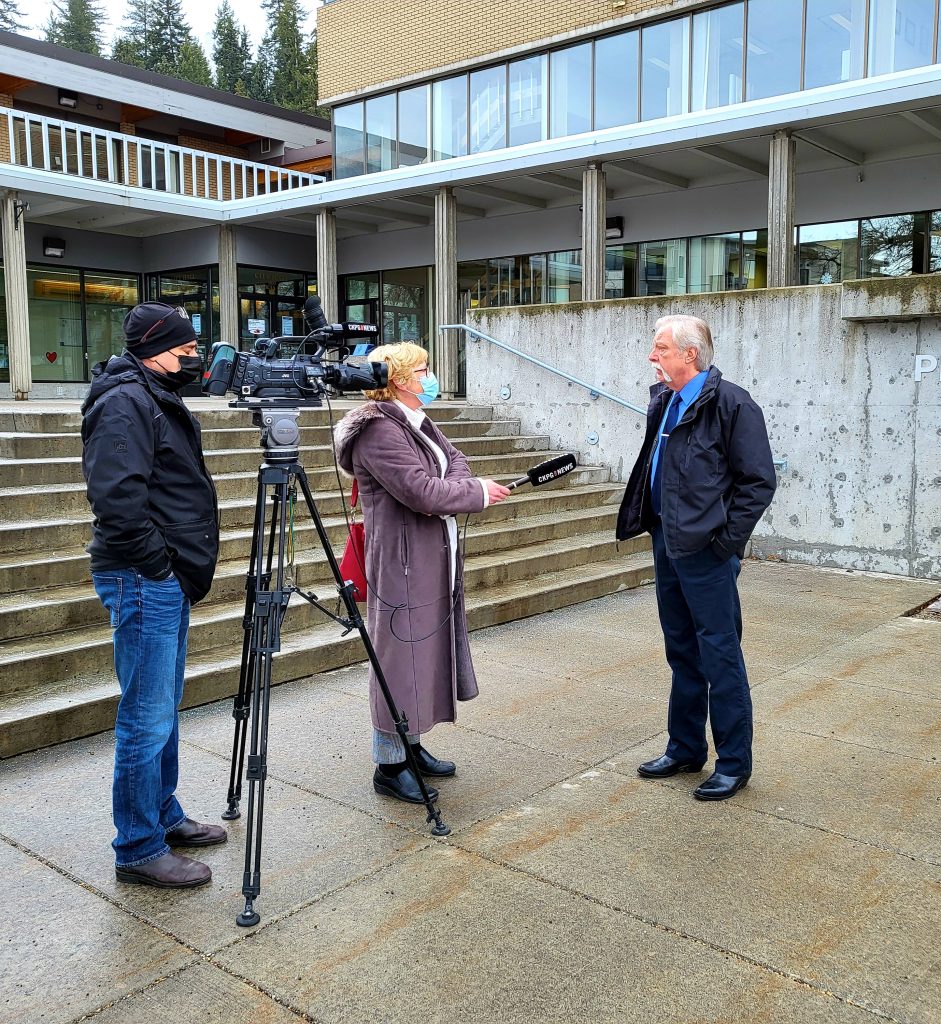
The Fix; from the steps of City Hall in 2022 announcing my candidacy. To 2026 still pushing for positive change for Prince George residents.
The Fix; “The Accountability Gap.”
“The CAO is an employee (Section 147). The Council is the Board of Directors. The Citizens are the Shareholders. Additionally 74% of Shareholders don’t show up to the meeting, the Employee starts running the Board. ‘The Fix’ is bringing the Shareholders back to the table.”
The Prince George Power Gap
| Election Year | Voter Turnout | Ballots Cast | Eligible Voters (Approx) |
| 2022 | 26.27% | 15,310 | 58,283 |
| 2018 | 24.06% | 13,184 | 54,852 |
| 2014 | 37.00% | 19,719 | 53,229 |
“In 2022, 42,973 eligible voters in Prince George stayed silent. This page is for them.”
- The Winner’s Circle: Simon Yu won with 6,092 votes.
- The Reality: That means only 10% of the eligible voters in Prince George actually chose the Mayor.
- The Silent Majority: There are over 43,000 people who didn’t vote. If you can reach even a quarter of them, you don’t just win an election—you completely replace the system.
The Legal Reality (Section 147): Even though only 10% voted for the leadership, the Chief Administrative Officer (CAO) is still legally bound by the Community Charter to ensure that “the policies, programs and other directions of the council are implemented.”
The Problem: Therefore when the Council has a weak mandate (only 10%), the CAO often ends up providing the “direction” instead of receiving it.
Section 147 — Chief Administrative Officer
A person appointed as chief administrative officer has the following responsibilities:
- (a) overall management of the operations of the municipality;
- (b) ensuring that the policies, programs and other directions of the council are implemented;
- (c) advising and informing the council on the operation and affairs of the municipality.
- The Law (Section 147): The CAO is legally required to follow the directions of the Council.
- The Reality: If only 26% of people vote, the Council often becomes a “rubber stamp” for the CAO’s administration because they lack a strong mandate from the public.
- The “Overthrow”: By showing that the CAO is just an employee who must follow Council direction, you are reminding the 74% who didn’t vote that they are the ones who actually own the corporation.
If the CAO is the one “running” the Mayor and Council, they are essentially violating the spirit of Section 147(b), because the “direction” should be coming from the people, through the Council, to the CAO.
The Fix; “Tools of Accountability”
1. The Citizen’s Audit (Section 168)
The Law: Under Section 168 of the Community Charter, the municipality must prepare an annual report that includes a statement of property tax exemptions and a report on municipal services and operations for the previous year.
The Fix; We don’t just wait for their report. We use Freedom of Information (FOI) requests to look at the CAO’s emails and the specific “directions” given to staff. If the paper trail doesn’t match the public law, the 74% have the evidence they need to act.
2. The 10% Veto (The AAP)
The Reality: The City often tries to pass big spending or land deals through the Alternative Approval Process (AAP). They count on you being part of the 74% who don’t notice.
The Fix: If just 10% of the electors sign a petition, the Council is legally blocked. They cannot move forward without a full referendum. This is the “Emergency Brake” of the city.
The Tools of Accountability: Pulling the Emergency Brake
Consequently, when the Council and the CAO operate without a clear mandate from the people, the Community Charter provides citizens with specific “Levers” to stop them in their tracks.
1. The 10% Veto (The Alternative Approval Process)
The City often tries to pass major borrowing or land deals using the Alternative Approval Process (AAP). They are betting that you—the 74%—won’t be looking.
- The Law: If 10% of eligible voters (about 5,800 people in Prince George) sign a petition against a proposal, the Council is legally blocked.
- The Result: They must either drop the project or hold a full, expensive referendum.
- The Fix: We organize. We watch the public notices. We pull the emergency brake.
2. The Right to Know (Freedom of Information)
The CAO’s office handles the “operations” of the city, but those operations are public business.
- The Tool: Freedom of Information (FOI) requests allow any citizen to request internal emails, meeting minutes, and expense reports.
- The Fix: We audit the “Direction.” If the CAO is moving in a direction the Council didn’t authorize (Section 147 violation), the paper trail will prove it.
The Gatekeeper Problem: When the Subject Audits the Auditor
In Prince George, we see a recurring issue: FOI requests being “filtered” or heavily redacted by the very administration they are meant to oversee.
- The Reality: Heavy editing and “shoving a nose” into requests is a stall tactic. It’s designed to make the 74% give up because the process feels rigged.
- The Fix: We don’t just accept the redactions. We move to the Office of the Information and Privacy Commissioner (OIPC) for BC. When the city “over-edits,” we appeal to the Province to force the unedited truth out.
The Fix; Who Audits the Auditor?
There is a fundamental flaw in how information flows in Prince George. When a citizen files a Freedom of Information (FOI) request to investigate city operations, the Chief Administrative Officer (CAO)—the person responsible for those operations—is often involved in “editing” the response.
Why this is a “Broken Chain”:
- The Conflict: Under Section 147, the CAO is an employee of the city. In no other professional world is the employee allowed to redact the performance review their boss is trying to read.
- The “Black Pen” Tactic: By heavily redacting documents, the administration creates a “Value Gap.” They provide the paper, but hide the truth, hoping the 74% will get frustrated and stop asking.
- The Legal Standard: FIPPA (The Privacy Act) is meant to protect personal privacy, not to hide administrative failures.
The Fix; We stop treating the City’s first response as the final word. Every “edited” document is a signal of where the secrets are kept. We use the Office of the Information and Privacy Commissioner (OIPC) to challenge every black line that smells like a cover-up.
“They can redact the documents, but they can’t redact the results. When the paperwork goes dark, the ‘person behind the camera’ looks closer at the actions. Accountability isn’t a request; it’s a requirement.”
“The Watchman’s Goal” In security, a camera is only as good as the person watching the feed. In a city, the law is only as good as the citizens who enforce it. ‘The Fix’ is about turning the lights on. Whether it’s through a lens or a Freedom of Information request, we are ensuring that the 10% mandate doesn’t lead to 100% control by the administration.
Data and media used on this page are provided with respect to the original creators. See my full [Attribution & Credits] page for more details.